
What Is a Data Center and Why Are People Talking About Water Usage?
The physical infrastructure behind the internet is one of the largest construction booms in history. Here is what it actually is, what it costs, and why the water debate is more complicated than the headlines suggest.
Every time you stream a video, send an email, or ask an AI a question, the work happens somewhere physical. It does not happen in a cloud. It happens in a building, filled with servers, cooled by enormous quantities of energy and — in many cases — water. That building is a data center.
Understanding what data centers are has become more relevant than it might seem. The four largest technology companies in the world — Amazon, Google, Meta, and Microsoft — plan to spend a combined $630 billion building and expanding them in 2026 alone. That is roughly the GDP of Sweden, deployed in a single year into physical infrastructure. The scale of that investment is reshaping electricity grids, water systems, and commercial real estate markets in ways most people have not yet registered.
What a Data Center Actually Is
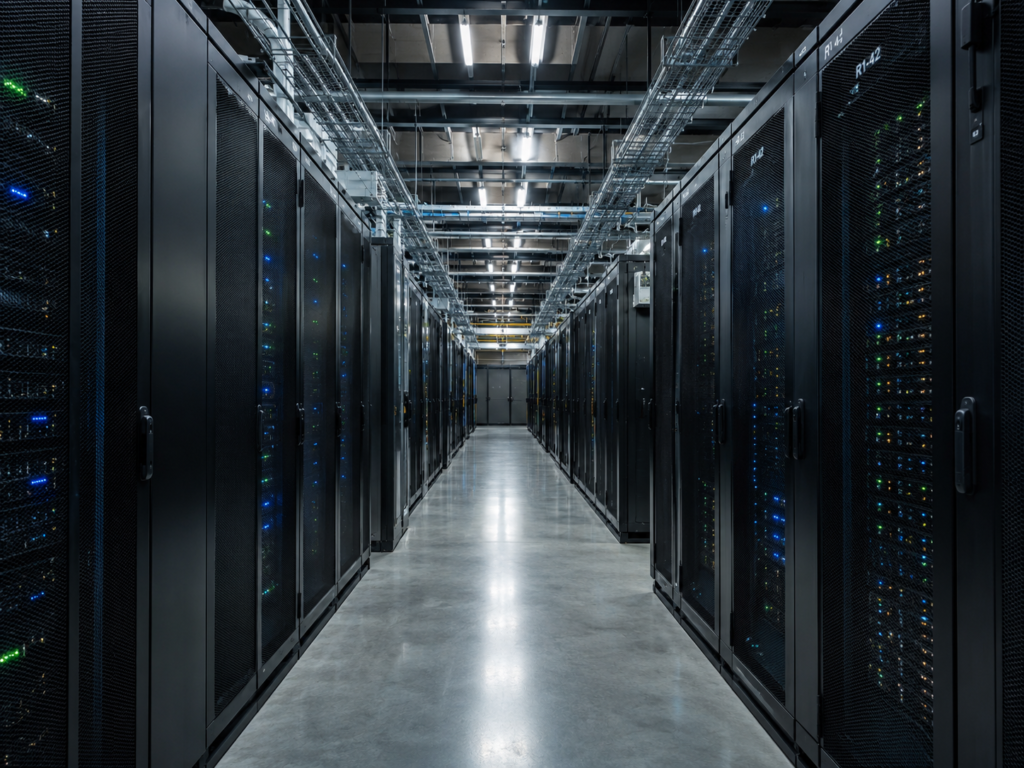
A data center is a large facility housing rows of computer servers. Those servers store data, run applications, and process requests. When you upload a photo, it goes to a server. When you load a webpage, a server sends it to you. When a company runs its payroll software, it runs on servers.
The servers generate significant heat. Left uncooled, they would fail. Keeping them at safe operating temperatures requires cooling systems, which is where energy and water enter the picture. A large data center can consume as much electricity as a small city, and many use water as part of the cooling process.
The largest data centers, known as hyperscale facilities, are owned by the big technology companies and cover hundreds of acres. Microsoft is currently building one that covers 315 acres. These are not modest facilities.
Who Owns Them
The data center market is dominated by a small number of companies. Amazon Web Services, Google Cloud, and Microsoft Azure collectively handle the majority of global cloud computing. When businesses or governments need computing power without buying their own servers, they rent capacity from one of these three.
This concentration matters financially. The $630 billion in capital expenditure planned for 2026 is not speculative spending. It is the infrastructure race underpinning the AI boom. Every large language model, every AI assistant, every automated system running at scale requires data centers to function. The companies building the most infrastructure now are betting that demand will justify the cost for decades to come.
What Is a Data Center and Why Are People Talking About Water Usage?/Peiid
The Water Question
The claim circulating most widely is that asking an AI a question uses roughly half a litre of water. That figure comes from a 2023 research paper and has been repeated extensively. Google disputes it, stating that a typical AI query uses closer to five drops. Sam Altman has suggested about one-fifteenth of a teaspoon.
The wide variation is not simply a matter of one side lying. It reflects genuine differences in methodology and, more importantly, in what is being measured.
Data centers cool their servers in different ways. Some use air cooling almost exclusively. Others use evaporative cooling, in which water is circulated through the facility and some of it evaporates, carrying heat away in the process. The water consumption of an evaporative cooling system is real and significant. The water consumption of an air-cooled facility is far lower.
Where a data center is located also matters. A facility in a cool, wet climate requires less active cooling than one in Arizona or Texas. The same query processed in different locations can have very different water footprints.
What is not in dispute is the aggregate scale. US data centers consumed an estimated 17.4 billion gallons of water in 2023. That figure is projected to reach between 38 and 73 billion gallons by 2028. Google’s data centers withdrew 7.8 billion gallons of water globally in 2024. Amazon disclosed for the first time in 2025 that its data centers consumed 2.5 billion gallons that year.
These are large numbers. The honest framing is that the water impact of any individual query is small and difficult to measure precisely, but the cumulative impact of the sector as a whole is large and growing rapidly.
Why This Is a Financial Story
The data center boom is one of the most significant capital allocation events in recent corporate history. The $630 billion being spent in 2026 by four companies is capital that has to come from somewhere, be deployed effectively, and eventually generate returns.
It is also creating downstream financial effects that are less widely discussed. Electricity demand from data centers is pushing up energy prices in regions where they concentrate. Commercial real estate markets near major data center clusters have been reshaped by land acquisition and construction activity. Water utilities in some areas are negotiating large supply agreements with technology companies.
For anyone trying to understand why energy stocks, utility companies, or semiconductor manufacturers are moving the way they are, data centers are increasingly part of the answer.
The physical infrastructure of the internet is no longer an invisible background process. It is one of the central stories in global capital markets.
For more on how investors are betting on and against the AI infrastructure boom, read our piece on short selling and Michael Burry’s recent positions.
Key Takeaways
- Amazon, Google, Meta, and Microsoft plan to spend $630 billion on data center infrastructure in 2026, a 62 percent increase from 2025.
- A data center is a large facility of servers that powers everything from cloud storage to AI. The digital world is physical.
- The water usage debate is real but complicated. Individual query estimates vary widely depending on cooling method and location. The aggregate sector impact is large and growing.
- US data center water consumption is projected to more than double by 2028.
- The data center boom is reshaping electricity grids, water systems, and financial markets in ways that go well beyond the technology sector.