
Why Does the US Economy Affect the Whole World?
The United States produces a quarter of global output with 4% of the world’s population. Here is why that concentration of economic power means that what happens in America does not stay in America.
When the US Federal Reserve raises interest rates, borrowing costs rise in countries that have never done business with an American company. When US consumer confidence falls, factories in Vietnam and Germany slow production. When American banks wobble, credit tightens in cities thousands of miles from Wall Street.
This is not coincidence. It is the predictable result of how deeply the US economy is embedded in global financial and trade systems — and understanding the mechanism is essential to making sense of almost any major economic event.
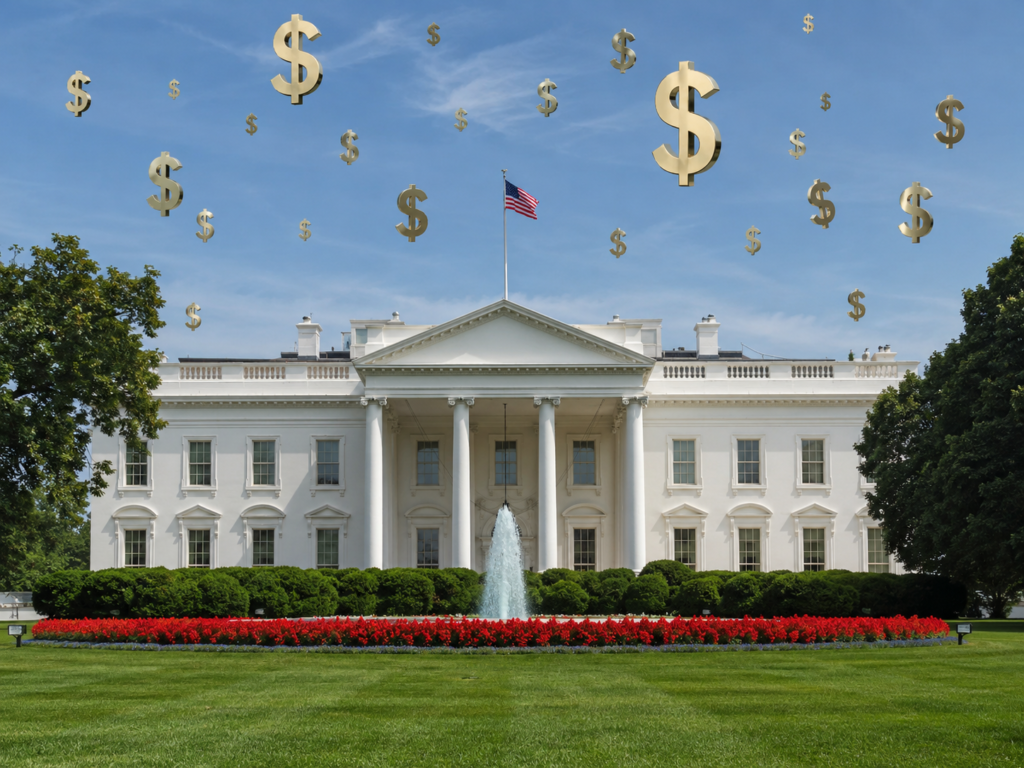
The Scale of It
The US economy is expected to reach $32.4 trillion in GDP in 2026, the largest in the world by a significant margin. China, the second largest, sits at $20.9 trillion. The US alone accounts for more than a quarter of all global economic output, despite representing roughly 4% of the world’s population.
To put that in proportion: the global economy is projected to reach $126 trillion in 2026. The US, China, Germany, and Japan together generate roughly half of that. The other 150-plus countries in the world share the remaining half.
That concentration of output means that fluctuations in US economic activity — consumer spending, business investment, government policy — propagate outward with a force that smaller economies simply cannot match.
The Dollar’s Role
Scale alone does not explain the full picture. What amplifies the US economy’s global reach is the role of the US dollar in international finance.
The dollar is the world’s reserve currency. Around 88% of all foreign exchange transactions involve the dollar. Approximately 58% of global foreign exchange reserves held by central banks are denominated in it. Roughly 54% of global trade is invoiced in dollars, including trade between countries that have nothing to do with the United States.
This position was established after the Second World War, when the US emerged as the dominant economic and military power. The Bretton Woods Agreement of 1944 made the dollar the anchor of the international monetary system, and although that specific arrangement ended in 1971, the dollar’s dominance persisted.
It was reinforced in the 1970s through what became known as the petrodollar system. After the US secured Saudi Arabia’s commitment to price oil exclusively in dollars, any country that needed to buy oil — which is to say, almost every country — needed dollars to do so. This created permanent, structural global demand for the currency that exists independently of any trade the US itself conducts.
The consequence is that when the US raises interest rates, dollar-denominated assets become more attractive globally, drawing capital toward the US and away from other markets. Countries that have borrowed in dollars find their debt burdens increase. Currencies weaken against the dollar. The effect spreads through the global financial system before most people have finished reading the Federal Reserve’s press release.
Trade Connections
Beyond finance, the US is one of the world’s largest importers. American consumers buying goods from China, Germany, Mexico, and dozens of other countries sustains employment and production in those economies. When US consumer spending falls — as it does during recessions — the reduction in demand is felt by exporters worldwide.
This is why a US recession tends to slow global growth even in countries whose own domestic economies are performing well. Their factories produce less because the American market is buying less. Their growth forecasts are revised downward. Their governments may respond with stimulus measures that have their own ripple effects.
The current tariff situation illustrates this in reverse. When the US imposes import tariffs, trading partners lose access to the American market on previous terms. They retaliate, affecting US exporters. Supply chains restructure. Companies in third countries that were part of those supply chains are affected even if neither the US nor the directly targeted country is a primary trading partner.
Why Other Countries Cannot Simply Ignore It
A reasonable question is why the rest of the world does not simply reduce its dependence on the US economy. The honest answer is that the interdependence is built into systems that are expensive and slow to change.
The dollar’s dominance in trade and reserves is self-reinforcing. Switching away from the dollar would require coordinating a large number of countries simultaneously, none of whom want to bear the transition costs alone. The depth and liquidity of US financial markets — the US bond market is the largest in the world — means that there is nowhere else of comparable size for global capital to park safely.
Some diversification away from the dollar has occurred. The dollar’s share of global reserves has fallen from around 71% in 2000 to roughly 59% today. But that erosion has been slow, and no credible alternative reserve currency has emerged to replace it at scale.
What This Means in Practice
For anyone trying to understand financial news, this interconnection is the essential background. It explains why European central banks watch Federal Reserve decisions closely. It explains why emerging market currencies tend to weaken when US interest rates rise. It explains why global stock markets frequently move in the same direction as US markets, even when local economic conditions are different.
The US economy is not just a large economy. It is the load-bearing structure of the global financial system. When it shifts, everything built on top of it shifts too.
Key Takeaways
- The US economy is projected to reach $32.4 trillion in GDP in 2026, more than a quarter of total global output, produced by 4% of the world’s population.
- The US dollar is used in 88% of global foreign exchange transactions and accounts for around 59% of global central bank reserves, giving US monetary policy worldwide reach.
- The petrodollar system, established in the 1970s, created permanent global demand for dollars by pricing oil in the US currency.
- When the US raises interest rates, the effects spread globally through capital flows, currency movements, and tightening credit conditions.
- The dollar’s dominance has been slowly declining — from 71% of reserves in 2000 to 59% today — but no credible alternative has emerged at comparable scale.