
The Rise and Fall of NFTs: Where Did They Go?
At its peak, a single JPEG sold for $69 million. Today, 96% of NFT collections have no trading activity at all. Here is what happened, and what — if anything — is left.
In March 2021, a digital artist named Beeple sold a collage of images as a non-fungible token at Christie’s auction house for $69.3 million. It was the third-highest price ever paid for a work by a living artist, and it introduced most of the world to a concept almost nobody fully understood.
What followed was one of the fastest boom-and-bust cycles in recent financial history.
What an NFT Actually Is
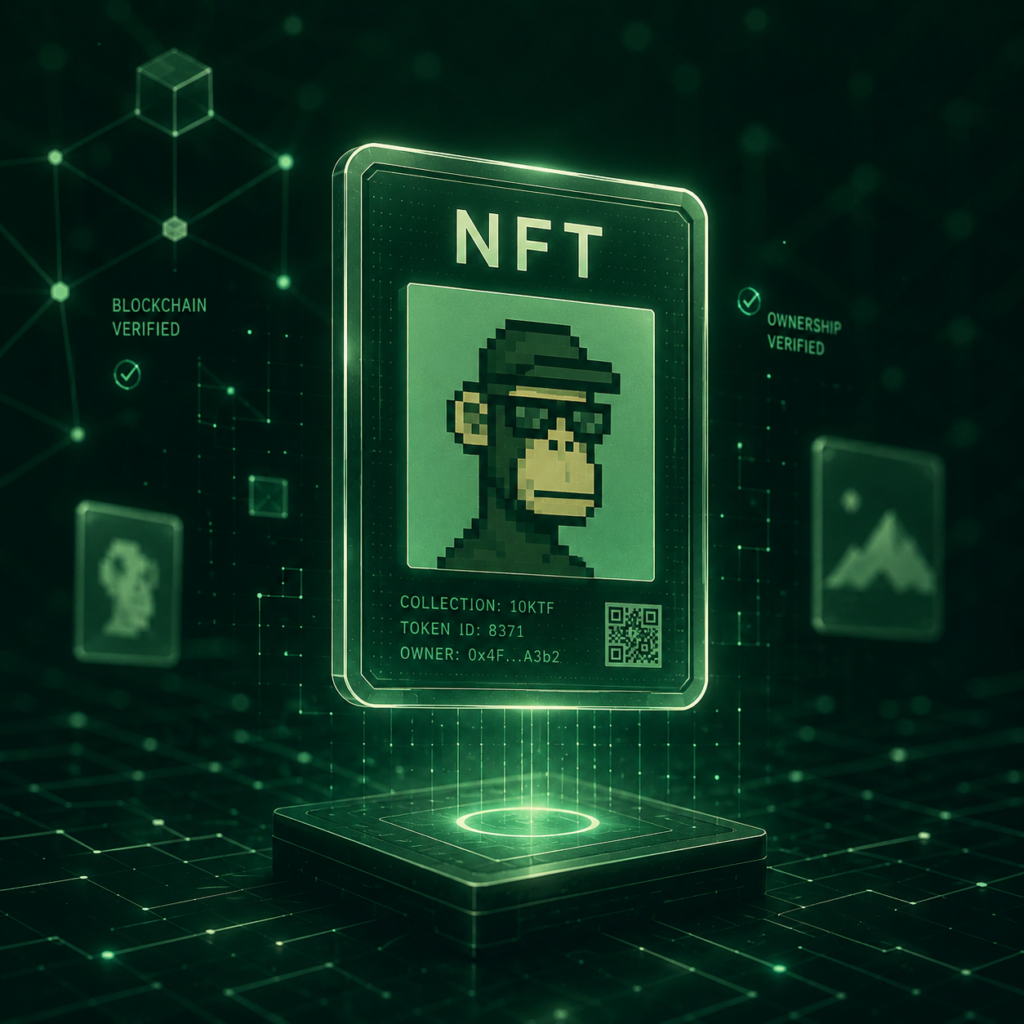
A non-fungible token is a record of ownership stored on a blockchain. The word “non-fungible” simply means it is unique — unlike a bitcoin, which is interchangeable with any other bitcoin, an NFT represents a specific, one-of-a-kind item.
What that item actually is can vary. In most cases during the boom, it was a digital image. The NFT did not give the buyer the copyright to the image, nor did it prevent anyone from right-clicking and saving a copy. What the buyer received was a blockchain record stating that they owned the original. The value, such as it was, came from that claim to authenticity.
The underlying technology is not inherently absurd. Proving digital ownership and authenticity is a genuine problem, particularly in creative industries. But the use to which it was most visibly put during 2021 and 2022 — selling cartoon profile pictures for hundreds of thousands of dollars — stretched that technology well beyond what it could reasonably support.
Why the Boom Happened
The NFT bubble did not emerge from nowhere. Several conditions combined to create it.
The pandemic had pushed significant amounts of money into speculative assets. Stimulus payments, low interest rates, and limited spending opportunities left many people with cash looking for somewhere to go. Cryptocurrency markets had already run up sharply, creating a large population of people sitting on digital wealth looking for the next opportunity.
At the same time, the concept of digital ownership had a genuine cultural appeal. A generation that had grown up entirely online found the idea of owning something uniquely theirs in a digital space compelling in a way that older investors did not always understand.
The result was a feedback loop. Early buyers made extraordinary returns. Media coverage followed. New buyers arrived, pushing prices higher. The total NFT trading volume in 2021 reached $25.1 billion. In January 2022 alone, the marketplace OpenSea recorded $5 billion in trading volume in a single month.
The Collapse
The peak did not last long. By June 2022, monthly trading volume had fallen from nearly $3.3 billion to just over $1 billion. The overall market declined by roughly 90% from its high within a year.
The proximate causes were several. Cryptocurrency markets fell sharply in 2022, taking NFT prices with them. The collapse of the FTX exchange in November 2022 damaged confidence in digital asset markets broadly. But underneath those events, the structural problem was simpler: the market had been built almost entirely on speculation, and speculation requires new buyers. When new buyers stopped arriving, prices had nowhere to go.
The numbers on individual projects were stark. Bored Ape Yacht Club, the most prominent NFT collection of the era, saw floor prices fall from over $400,000 in early 2022 to a fraction of that by 2024. Justin Bieber paid approximately $1.3 million for a Bored Ape NFT in January 2022. By December 2025, the best available offer for it was around $2,800 — a loss of more than 99%.
By 2025, annual NFT trading volume had fallen to around $5.5 billion, down roughly 95% from the peak quarter. Approximately 96% of all NFT collections created during the boom are now considered dead, with no trading activity and no community engagement.
What Survived
Not everything collapsed to zero, and the underlying technology found uses that the profile-picture era had obscured.
Luxury brands discovered that NFTs provided a practical solution to counterfeiting. Companies within the LVMH group began issuing blockchain-based certificates of authenticity for high-end products, giving buyers a verifiable record of provenance that travels with the item. Universities and professional bodies started issuing qualifications as NFTs, creating credentials that cannot be falsified and can be verified instantly.
In gaming, NFTs allowed players to own in-game assets in a way that persisted across platforms and could be sold or transferred. Event ticketing found a legitimate application in NFTs, which can prevent scalping and verify authenticity at the point of entry.
The market that remains is small and concentrated. A few collections with genuine cultural weight or institutional backing attract most of the remaining trading volume. The vast majority of 2021-era projects are worthless. Total market capitalisation fell to around $2.5 billion by the end of 2025.
What the Episode Tells Us
The NFT boom followed a pattern that appears repeatedly in financial history. A genuinely interesting new technology emerges. Speculative interest far outpaces the actual utility the technology can deliver. Prices rise until they cannot be sustained, then fall until most participants have lost money.
This does not mean the technology was worthless. The internet crash of 2000 wiped out thousands of companies and destroyed enormous amounts of capital. It also preceded two decades during which the internet reshaped the global economy. The companies that survived and built real things went on to become the most valuable in history.
Whether NFT technology follows a similar path — a speculative collapse followed by quiet, practical adoption — is the open question. The signs of genuine utility are there, in authentication, credentials, and digital ownership. Whether that utility justifies a large financial market built around it remains to be seen.
What is clear is that buying a cartoon ape for $400,000 on the assumption that someone else would pay $800,000 was not an investment strategy. It was speculation. And speculation, when the music stops, tends to end the same way.
Key Takeaways
- NFTs are blockchain records of ownership for unique digital items. They do not confer copyright and do not prevent copying.
- Total NFT trading volume peaked at $25.1 billion in 2021. By 2025 it had fallen to $5.5 billion, roughly 95% below the peak quarter.
- 96% of NFT collections created during the boom are now considered dead with no trading activity.
- The collapse was driven by falling cryptocurrency markets, the FTX collapse, and the absence of new buyers entering a speculation-driven market.
- Legitimate use cases — luxury authentication, digital credentials, gaming assets — survived. The speculative profile-picture market largely did not.